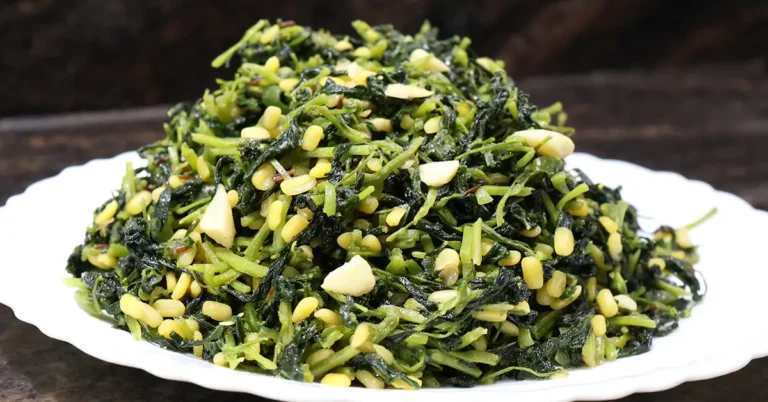


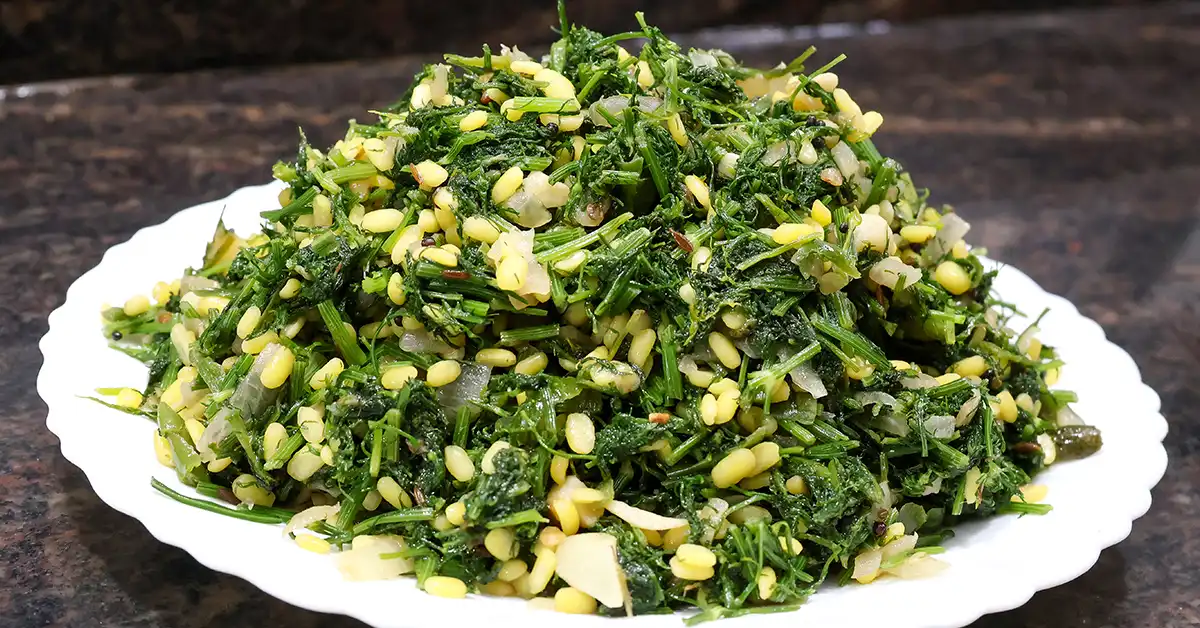
If you are searching for a quick, nutritious, and simple everyday vegetable dish, this Shepu Moong Dal Bhaji Recipe is exactly what you need! Shepu, also known as dill leaves, has a very distinct and refreshing flavour. When combined with soaked moong dal (yellow lentils), it creates a perfectly balanced Maharashtrian side dish that is both healthy and comforting.
Many beginners avoid cooking green leafy vegetables because they fear they might turn out bitter or soggy, but this specific Shepu Moong Dal Chi Bhaji is practically foolproof. By cooking it in a simple tempering of mustard seeds, cumin, garlic, and fresh green chillies, you enhance the natural taste of the dill leaves without overpowering them. Whether you are packing a lunchbox or preparing a quick weeknight dinner, this beginner-friendly green vegetable will quickly become a favourite in your kitchen rotation.
Ingredients List:
- 1 1/2 tablespoons cooking oil
- 1 teaspoon mustard seeds
- 1 teaspoon cumin seeds (jeera)
- 3 cloves of garlic, roughly chopped
- 1 medium onion, finely chopped (optional)
- 2 green chillies, crushed or finely chopped
- 1 large bunch fresh Shepu (dill leaves), cleaned, washed, and chopped
- 1/2 cup yellow moong dal, soaked for 1 hour
- Salt to taste
Step-by-step Instructions:
- Heat the oil: Place a kadhai (pan) on the stove and heat 1 1/2 tablespoons of oil.
- Add the tempering: Once the oil is hot, add the mustard seeds and cumin seeds. Let them crackle.
- Sauté the aromatics: Add the chopped garlic and sauté until it slightly changes colour. Then, add the chopped onion and cook until lightly browned.
- Add the spice: Toss in the crushed green chillies and fry them well with the onion and garlic mix.
- Cook the greens: Add your freshly washed and chopped Shepu (dill leaves) to the pan and mix everything well.
- Mix in the lentils: Drain the water from your soaked moong dal and add it to the pan. Stir thoroughly so the lentils and greens are combined.
- Season the dish: Add salt to taste and mix well. You will notice the mixture naturally releasing a little bit of water.
- Let it cook: Let the bhaji cook on a low or medium flame. Do not cover the pan with a lid. Simply stir occasionally until the natural water evaporates and the moong dal is tender. Serve hot!
Also Read: Authentic Mirchicha Kharda Recipe: Easy Maharashtrian Chutney
Cooking Tips:
- Do not use a lid: Always cook Shepu bhaji uncovered. Covering the pan can trap steam, which often makes leafy greens lose their bright colour and can sometimes make the dish taste slightly bitter.
- Pre-soak your lentils: Soaking the moong dal for at least 1 hour ensures it cooks quickly and evenly along with the leafy greens.
- Wash before chopping: Always wash your dill leaves thoroughly before chopping them to retain maximum water-soluble vitamins.
Variations:
- Chana Dal Version: You can easily swap out the moong dal for chana dal (split chickpeas). Just remember to soak the chana dal for at least 2 hours because it takes longer to cook.
- No Onion, No Garlic (Jain-friendly): Skip the onion and garlic entirely! The combination of cumin, chillies, and fresh dill is strong enough to carry the dish on its own.
- Spicy Version: If you prefer extra heat, add 1/2 teaspoon of red chilli powder or an extra crushed green chilli into the oil tempering.
- Potato Variation: Instead of lentils, you can add 1/2 cup of finely cubed potatoes to the oil right after the onions. Let the potatoes soften slightly before adding the dill leaves.
Serving Suggestions:
This flavorful Shepu Moong Dal Bhaji pairs incredibly well with traditional Maharashtrian Bhakri (especially Jowar or Bajra). It is also fantastic served alongside hot chapatis or phulkas. For a complete comfort meal, serve it as a dry side dish with plain Varan Bhaat (dal and rice).
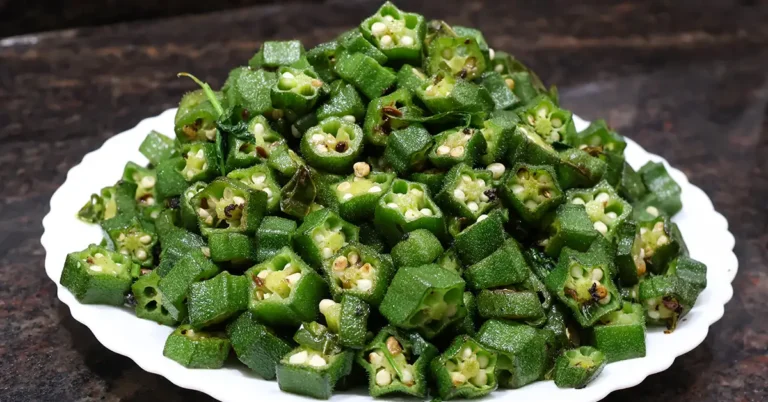
Also Read: Quick Non-Sticky Bhindi Recipe: Easy Okra Fry
FAQs:
Q: Is Shepu (dill leaves) good for health?
A: Yes! Dill leaves are packed with antioxidants, vitamin C, and calcium. They are great for digestion and help boost your immune system.
Q: Can I use chana dal instead of moong dal?
A: Absolutely. However, chana dal takes longer to cook, so you must soak it in water for about 2 hours before adding it to the pan.
Q: Do I need to add water to cook the Shepu Moong Dal Bhaji?
A: No extra water is needed. Once you add the salt, the greens will release their own moisture, which is enough to steam and cook the soaked moong dal perfectly.
Q: Why is my Shepu bhaji bitter?
A: Shepu has a naturally strong, herbaceous flavour that some mistake for bitterness. To keep it tasting fresh and pleasant, cook the bhaji without a lid and ensure you are balancing the flavours with the right amount of salt, green chillies, and garlic.
Quick Shepu Moong Dal Bhaji Recipe: Ready in Minutes

Ingredients
- 1 1/2 tablespoons cooking oil
- 1 teaspoon mustard seeds
- 1 teaspoon cumin seeds jeera
- 3 cloves of garlic roughly chopped
- 1 medium onion finely chopped (optional)
- 2 green chillies crushed or finely chopped
- 1 large bunch fresh Shepu dill leaves, cleaned, washed, and chopped
- 1/2 cup yellow moong dal soaked for 1 hour
- Salt to taste
Instructions
- Heat the oil: Place a kadhai (pan) on the stove and heat 1 1/2 tablespoons of oil.
- Add the tempering: Once the oil is hot, add the mustard seeds and cumin seeds. Let them crackle.
- Sauté the aromatics: Add the chopped garlic and sauté until it slightly changes colour. Then, add the chopped onion and cook until lightly browned.
- Add the spice: Toss in the crushed green chillies and fry them well with the onion and garlic mix.
- Cook the greens: Add your freshly washed and chopped Shepu (dill leaves) to the pan and mix everything well.
- Mix in the lentils: Drain the water from your soaked moong dal and add it to the pan. Stir thoroughly so the lentils and greens are combined.
- Season the dish: Add salt to taste and mix well. You will notice the mixture naturally releasing a little bit of water.
- Let it cook: Let the bhaji cook on a low or medium flame. Do not cover the pan with a lid. Simply stir occasionally until the natural water evaporates and the moong dal is tender. Serve hot!