


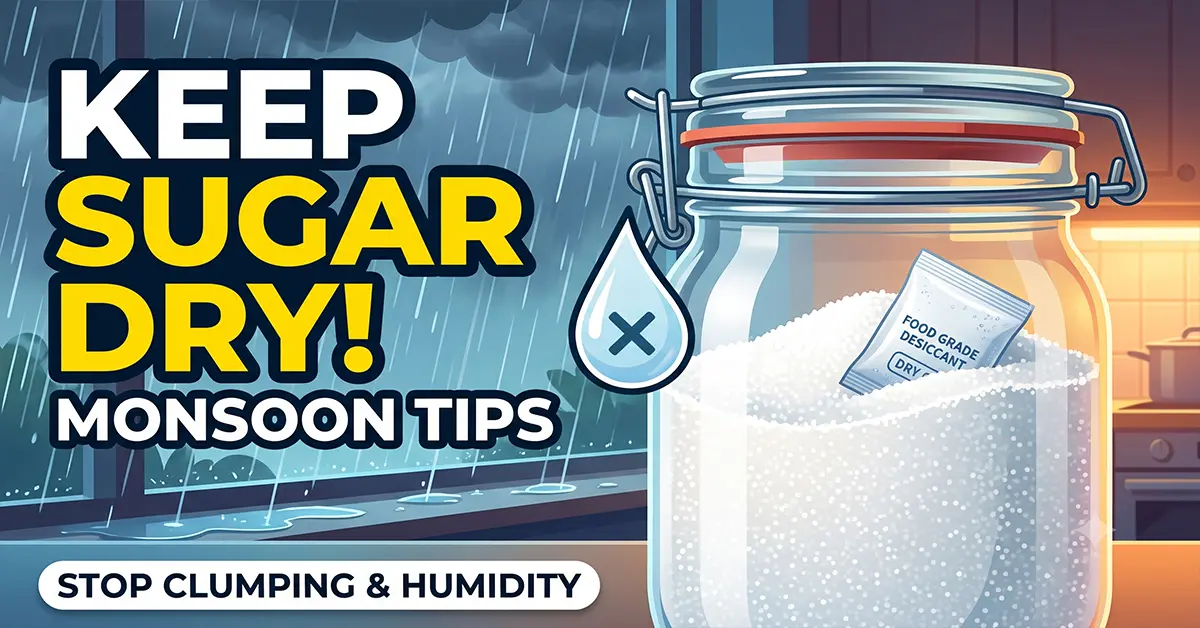
A rainy afternoon is the perfect excuse for a hot cup of coffee or masala chai. But that comforting moment is instantly ruined when you open your pantry only to find your sugar has turned into a solid, damp brick. If you are tired of chiselling away at clumps every July and August, you aren’t alone. Learning how to prevent sugar from becoming wet in monsoon weather is essential for preserving your pantry staples and keeping your ingredients fresh.
Let’s explore the science-backed, foolproof storage hacks that actually work in today’s high-humidity environments.
Why Does Sugar Clump During the Rainy Season?
Before we fix the problem, it helps to understand the enemy: humidity. Both white and brown sugar are highly hygroscopic, meaning they naturally attract and absorb water vapour from the surrounding air.
During the monsoon, indoor relative humidity often spikes above 65%. When this happens, the moisture in the air binds to the surface of the sugar crystals. In brown sugar, this moisture dissolves the outer molasses layer. As the temperature fluctuates and the moisture evaporates slightly, the crystals fuse together into an impenetrable block.
5 Expert Hacks to Prevent Sugar from Becoming Wet in Monsoon
If your current strategy is aggressively stabbing your sugar bowl with a spoon, it is time for an upgrade. Here are the most effective methods to maintain a dry microclimate in your pantry.
1. Upgrade to Rigid Airtight Containers
Flimsy, stretched-out plastic containers are your worst enemy during the rains. To completely block out ambient moisture, you need containers with a true silicone gasket seal.
- Material Matters: Swap cheap plastic for heavy-duty glass, food-grade stainless steel, or high-quality BPA-free acrylic. These materials do not absorb moisture or allow micro-leaks.
- Size Matters: Do not store a small amount of sugar in a massive jar. The empty space (headspace) traps humid air inside. Match the container size to your sugar volume.
2. The Uncooked White Rice Desiccant
This is a classic trick verified by modern culinary science. Rice acts as a passive desiccant; its porous starch granules absorb excess water vapour in the container before the sugar can.
- How to do it: Place 1–2 tablespoons of uncooked, long-grain white rice into a small muslin bag or a breathable paper coffee filter. Tie it off and bury it in your sugar jar.
- Why white rice? Avoid brown rice, as the natural oils in its bran layer can turn rancid in warm, humid weather and ruin your sugar’s flavour. Replace the rice sachet every 4 to 6 weeks.
3. Repurpose Food-Safe Silica Gel Packets
You know those little “Do Not Eat” packets that come in roasted seaweed snacks or new reusable water bottles? Those are silica gel packets, and they are incredibly efficient moisture absorbers. Keep a few clean, food-safe packets and tape them to the inside lid of your sugar jar. They will actively pull humidity out of the air every time you open and close the container.
4. Use a Terracotta Sugar Saver
If you are dealing specifically with brown sugar, a terracotta disc is a lifesaver. Terracotta is naturally porous. While it is often soaked in water to add moisture to dry winter sugar, putting a bone-dry terracotta disc into your jar during the humid monsoon will have the opposite effect—it will pull excess moisture away from the sugar crystals, keeping them loose and scoopable.
5. Mind Your Kitchen Geography
Where you store your sugar is just as important as how you store it.
- Keep it away from heat: Do not keep your sugar jar next to the stove, the dishwasher vent, or above the sink. Steam and heat accelerate moisture absorption and microbial growth.
- Dry utensils only: Never dip a wet or used spoon into your sugar jar. A single drop of water can ruin the whole batch.
Debunking Old Monsoon Kitchen Myths
Not all internet hacks are created equal. In fact, some viral tricks can actively ruin your food when humidity levels are high.
| Popular Hack | The Reality in High Humidity | Verdict |
| Adding a slice of bread/apple wedge | Often used to soften brown sugar in dry winters. In the monsoon (≥65% humidity), introducing high-moisture foods like bread turns your sugar jar into a mould incubator. | ❌ Avoid |
| Smashing clumps with a meat mallet | Mechanical fracturing breaks the crystals into irregular shapes that absorb moisture even faster due to increased surface area. | ❌ Avoid |
| Vacuum Sealing Jars | Removing the air entirely eliminates the moisture and prevents crystallisation from starting. | ✅ Highly Effective |
Frequently Asked Questions (FAQs)
1. Can I fix sugar that is already wet and clumpy?
Ans: Yes. For white sugar, spread it out on a baking sheet and bake it at a very low temperature (around 150°F / 65°C) for 15-20 minutes to evaporate the moisture. Let it cool completely before storing it in an airtight jar. For brown sugar, seal it in an airtight container with a fresh pouch of dry white rice for 24-48 hours to draw the moisture out naturally.
2. Should I keep my sugar in the refrigerator during the monsoon?
Ans: No. Refrigerators are surprisingly humid environments. Furthermore, taking cold sugar out into a warm, humid kitchen causes instant condensation inside the jar, completely ruining the batch. Store sugar in a cool, dark, and dry pantry cabinet instead.
3. Are silica gel packets safe to put in my food jars?
Ans: Yes, as long as they are intact and specifically labelled as food-safe (like the ones found in beef jerky or dried seaweed packaging). Never cut them open; just place the intact packet inside your airtight container.
4. Why does my brown sugar become rock hard, but my white sugar just gets slightly clumpy?
Ans: Brown sugar contains molasses, which adds moisture and flavour. When the ambient humidity fluctuates, the moisture in the molasses evaporates, effectively glueing the sucrose crystals together into a solid brick. White sugar lacks molasses, so it just clumps from surface condensation.
Conclusion
You do not have to accept damp, clumpy kitchen staples as an inevitable part of the rainy season. By upgrading to true airtight glass or steel containers, utilising natural desiccants like uncooked white rice, and keeping your jars far away from steam, you can effortlessly prevent sugar from becoming wet in monsoon conditions.
Protecting your pantry is all about regulating the microclimate. Implement these smart storage habits today, and your sugar will stay perfectly flowable all season long.
Have a genius kitchen storage hack of your own? Share this article with your favourite monsoon tips, or check out our guide on keeping spices fresh year-round!