


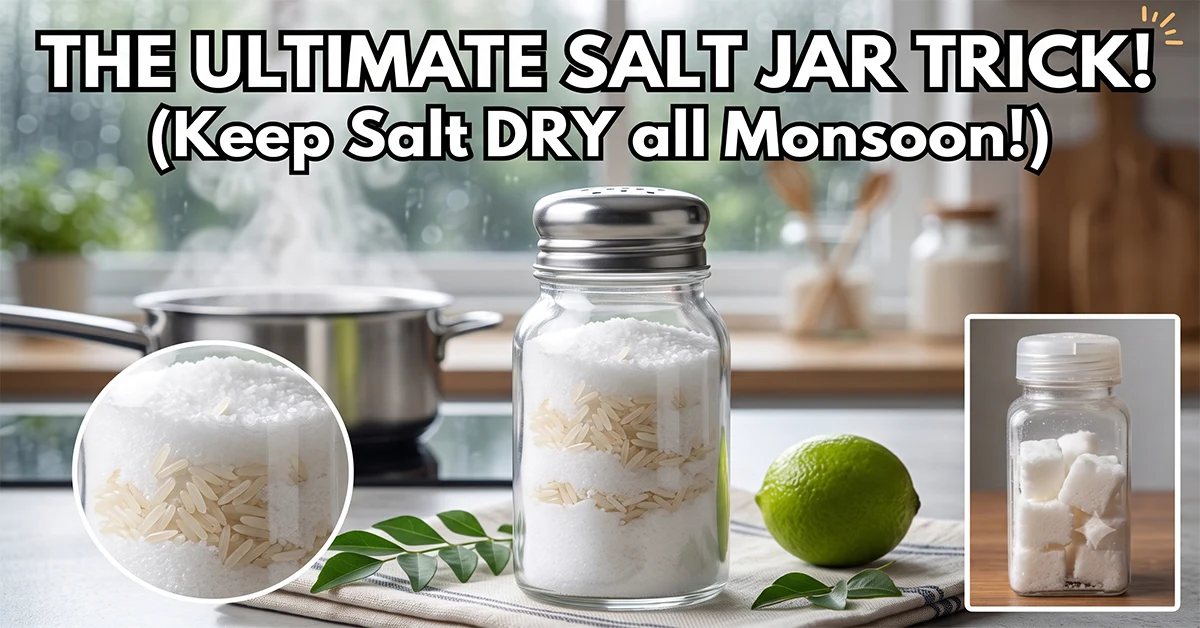
The monsoon season brings much-needed relief from the sweltering heat, but it also invites a highly frustrating guest into your kitchen: relentless humidity. You know the exact scenario. You are in the middle of cooking a delicious, steaming hot curry, you grab the salt jar, give it a firm shake, and absolutely nothing comes out.
Instead of free-flowing granules, you are left staring at a rock-solid, damp block of salt.
If you are tired of aggressively tapping salt shakers against your kitchen counter, you are not alone. Because salt is naturally hygroscopic (meaning it acts like a magnet for water molecules in the air), it will always clump when the humidity spikes. Fortunately, generations of cooks have already solved this problem. Read on to discover the absolute best trick to absorb moisture from the salt jar, plus a few backup methods to ensure your spices stay perfectly dry all season long.
The Ultimate Solution: The Raw Rice Trick
When it comes to keeping salt dry in humid weather, you do not need expensive silica packets or specialized dehumidifying containers. The most effective solution is already sitting in your pantry: raw, uncooked rice.
Adding a few grains of raw white rice to your salt shaker or storage jar is a time-tested diner trick that works flawlessly.
Why Does This Work?
- Superior Absorption: Rice is a natural desiccant. It absorbs airborne moisture at a much faster rate than salt does. By soaking up the ambient humidity inside the jar, the rice acts as a protective shield for the salt granules.
- Mechanical Action: Beyond just absorbing moisture, rice grains are hard and relatively heavy. Every time you shake the jar, the rice grains act like tiny wrecking balls, physically smashing any micro-clumps of salt before they can fuse into a solid rock.
Step-by-Step: How to Do It Right
Executing this trick is incredibly simple, but getting the ratios right ensures you don’t end up pouring rice onto your dinner plate.
- Step 1: Ensure your salt jar or shaker is completely clean and bone-dry. Even a single drop of residual water from washing can ruin a fresh batch of salt.
- Step 2: Fill your salt jar to about the 75% mark. Do not overfill it; the salt needs room to move.
- Step 3: Drop in 10 to 15 grains of raw, uncooked long-grain white rice (like Basmati). Avoid parboiled or cooked rice, as they already hold moisture.
- Step 4: Close the lid tightly and give the jar a good shake to distribute the rice evenly throughout the salt.
Expert Tip: If your salt shaker has unusually large dispensing holes where rice grains might slip through, simply wrap the rice grains in a tiny piece of cheesecloth or muslin fabric and drop the miniature pouch into the jar.
Also Read: 7 Genius Hacks to Prevent Sugar from Becoming Wet in Monsoon
3 Alternative Hacks to Keep Salt Dry in Monsoon
If you are out of rice, or simply want to try something different, here are three highly effective alternatives to keep your salt free-flowing.
1. The Coffee Bean Method
Just like rice, roasted coffee beans are excellent at soaking up humidity. Dropping 4 to 5 roasted coffee beans at the bottom of your salt jar will effectively draw out moisture. As a bonus, the dark beans look incredibly aesthetic against the white salt in a clear glass jar. Because salt does not easily absorb odours, the coffee won’t drastically alter the flavour of your seasoning.
2. The Clove (Lavang) Pouch
In many traditional Indian and South Asian kitchens, cloves are the go-to moisture absorbers for all types of spice jars. Cloves naturally deter moisture and even keep pantry bugs at bay.
- How to use: Wrap 4-5 cloves in a small piece of cotton cloth and place it in the salt container. Wrapping it is crucial because loose cloves can sometimes lend a faint, spicy aroma to the salt if left for months.
3. Soda Crackers
For larger, bulk-storage salt containers (like the main jar you keep in the pantry), place a single soda cracker or a piece of blotting paper at the bottom before pouring the salt in. The cracker will aggressively absorb the moisture. Just remember to replace the cracker every 15 to 20 days so it doesn’t break down and mix into your salt.
Choosing the Right Salt Container
The container you use plays a massive role in whether your salt survives the rainy season. No trick will work if your storage method is fundamentally flawed. Here is a quick comparison of popular salt storage materials to help you make the best choice:
| Container Material | Moisture Resistance | Pros & Cons | Verdict for Monsoon |
| Glass (with airtight lid) | Excellent | Pros: Non-porous, easy to see contents. Cons: Fragile. | Highly Recommended |
| Ceramic / Stoneware | Good | Pros: Blocks sunlight, keeps temperature stable. Cons: Heavy, lids sometimes lack rubber seals. | Good (if sealed well) |
| Plastic | Average | Pros: Cheap, durable. Cons: Can degrade over time, sometimes allows micro-moisture penetration. | Not Ideal |
| Wood / Bamboo | Poor | Pros: Looks rustic and natural. Cons: Wood naturally absorbs moisture from the air and transfers it to the salt. | Avoid During Monsoon |
Always store your primary salt jar in a cool, dry cupboard. Never leave it directly next to the stovetop, as the rising steam from boiling pots will instantly penetrate the shaker holes and cause clumping.
Also Read: Easy Mugachi Sukhi Bhaji Recipe | Healthy Dry Moong Sabzi
Frequently Asked Questions (FAQ)
Q. Does adding rice to the salt shaker change the taste of the salt?
Ans: No. Raw, uncooked white rice has a completely neutral flavour and will not alter the taste, smell, or colour of your salt in any way.
Q. Can I use brown rice instead of white rice?
It is best to stick to white rice. Brown rice still has its bran layer intact, which contains natural oils. These oils can eventually go rancid if left sitting in a jar for several months, which might spoil your salt.
Q. How often should I change the rice in my salt shaker?
Ans: Under normal conditions, you rarely need to change it until the salt runs out. However, during a heavily humid monsoon season, it is good practice to replace the rice grains once a month to ensure maximum moisture absorption.
Q. Do wooden toothpicks work to keep salt dry?
Ans: Yes, adding a wooden toothpick to your salt shaker can help. Wood absorbs moisture naturally. However, a toothpick doesn’t provide the mechanical “smashing” action that rice grains do when shaken, making rice the superior option.
Q. How can I fix salt that has already clumped and hardened?
Ans: If your salt is already a solid rock, don’t throw it away! Empty the clumped salt onto a microwave-safe plate and microwave it on high for 20 to 30 seconds. The heat will rapidly evaporate the trapped moisture. Once it cools, crush the clumps with the back of a spoon, put it back in the jar, and add raw rice.
Conclusion
Dealing with a clogged salt shaker when you are in the middle of preparing a meal is an annoyance nobody wants to deal with. By utilizing the simple raw rice trick to absorb moisture from the salt jar, you can effortlessly outsmart the monsoon humidity. It takes less than ten seconds to do, costs virtually nothing, and guarantees perfectly dry, free-flowing salt all season long.
If you found this monsoon kitchen hack helpful, share it with a friend who loves cooking, or explore our other guides on optimizing your kitchen storage during the rainy season!